
5 Red Flags Investors Should Watch for When Touring a San Antonio Property
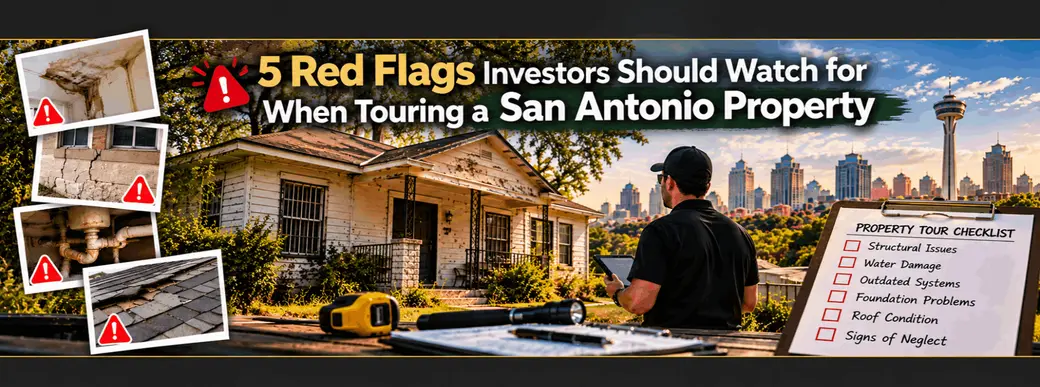
5 Red Flags Investors Should Watch for When Touring a San Antonio Property
A dated kitchen doesn't scare most real estate investors.
Old flooring doesn't either.
In fact, cosmetic problems can sometimes be exactly what investors want to see because they may create an opportunity to add value.
But not every problem is cosmetic.
Some issues can turn a promising San Antonio investment property into a much larger renovation project than expected.
The goal is to understand what you're buying before the numbers surprise you.
Whether you're evaluating a fix-and-flip, BRRRR, rental, or another value-add opportunity, here are five major red flags investors should pay attention to when touring a San Antonio property.
Red Flag #1: Signs of Foundation Movement
Foundation issues can change a deal quickly.
Foundation movement doesn't automatically mean a property should be avoided, but it does mean investors should investigate further.
When touring a property, look for signs such as:
- Large cracks in interior walls
- Cracks around windows or doors
- Doors that don't close properly
- Uneven or sloping floors
- Exterior brick or masonry cracks
- Gaps between walls and ceilings
- Windows that appear difficult to open
Some cracking can be cosmetic or related to normal movement.
But investors shouldn't assume that's the case without appropriate evaluation.
If the property shows possible structural concerns, consider bringing in a qualified inspector, structural engineer, or foundation professional as appropriate.
The important question isn't simply:
"Does this property have foundation issues?"
It's:
"What will it realistically cost to correct them, and does the investment still work afterward?"
Red Flag #2: Roof Problems and Water Intrusion
A roof nearing the end of its useful life can significantly increase your rehab budget.
During your property tour, look for:
- Missing shingles
- Visible roof damage
- Water stains on ceilings
- Stains around vents
- Discoloration in attic areas
- Soft or damaged drywall
- Signs of previous leaks
Water damage can sometimes indicate more than a roofing problem.
Moisture may affect drywall, insulation, flooring, framing, and other materials.
Don't budget only for the obvious repair. Try to determine whether the visible damage may have affected additional parts of the property.
A roof replacement may still fit your investment strategy.
But you want that expense included in the deal analysis before closing—not discovered after you own the property.
Red Flag #3: Plumbing and Drainage Issues
Small plumbing problems can hide larger expenses.
Check areas around:
- Kitchen sinks
- Bathroom vanities
- Toilets
- Showers and tubs
- Water heaters
- Laundry connections
Look for:
- Water stains
- Damaged cabinetry
- Soft flooring
- Low water pressure
- Slow drains
- Visible leaks
- Signs of previous repairs
Drainage outside the property matters too.
Water consistently collecting near the foundation or poor grading around the house may create additional concerns.
For older or heavily renovated properties, investors may also want to understand the condition of supply lines, drain lines, and sewer components.
Red Flag #4: Electrical Problems or Questionable DIY Work
Investment properties sometimes have years of homeowner modifications.
Some are professionally completed.
Others aren't.
During your walkthrough, look for warning signs such as:
- Exposed wiring
- Loose outlets or switches
- Burn marks around outlets
- Extension cords being used permanently
- Unusual electrical modifications
- Older electrical panels
- Open junction boxes
- Fixtures that don't work
Electrical repairs aren't something investors should estimate solely by looking at a few outlets.
If there are concerns, a qualified electrician can provide better information about the property's condition and potential repair requirements.
A beautiful new kitchen doesn't offset unsafe or outdated major systems.
Red Flag #5: A Rehab Budget That Only Works in the Best-Case Scenario
This may be the most important red flag of all.
Sometimes the biggest risk isn't physically inside the property.
It's inside the spreadsheet.
Imagine an investment works only if:
- You purchase at the exact price you're targeting
- Rehab costs don't increase
- The renovation finishes on schedule
- You achieve the highest projected ARV
- No major systems need additional work
- Financing costs don't change
That's very little margin for error.
Real estate projects often have surprises.
Investors can protect themselves by running multiple scenarios.
Base Case
What you realistically expect to happen.
Better Case
What happens if the project goes extremely well.
Conservative Case
What happens if repairs cost more, the project takes longer, or the exit value comes in lower?
If the property only makes sense under the best possible scenario, it deserves additional scrutiny.
Cosmetic Problem or Investment Red Flag?
Not every ugly feature should scare an investor.
Some problems may simply create opportunity.
Potentially Cosmetic
- ☐ Old paint
- ☐ Dated flooring
- ☐ Old light fixtures
- ☐ Outdated cabinets
- ☐ Basic landscaping issues
- ☐ Dated bathroom finishes
Worth Deeper Investigation
- ☐ Foundation movement
- ☐ Roof leaks
- ☐ Significant water damage
- ☐ Electrical concerns
- ☐ Plumbing problems
- ☐ Drainage concerns
- ☐ Major HVAC issues
- ☐ Unpermitted or questionable additions
What About HVAC?
In San Antonio, HVAC deserves special attention.
A property can look great cosmetically while still needing a major mechanical replacement.
Ask about:
- Age of the system
- Service history
- Whether heating and cooling operate properly
- Visible damage
- Condition of ductwork
For a rental property, reliable HVAC can also affect tenant satisfaction and future maintenance costs.
Watch for Unpermitted Additions
Another area investors should investigate is property additions or conversions.
Examples may include:
- Converted garages
- Added bedrooms
- Enclosed patios
- Additional bathrooms
- Room additions
An addition can create useful square footage, but investors should verify what they're actually buying.
Questions can include:
- Was the work permitted when required?
- Is the square footage reflected in available records?
- Was the work completed professionally?
- Will an appraiser treat the space the way you're assuming?
Don't automatically calculate your ARV using square footage that may not be recognized in the same way as the original living area.
Don't Let Fresh Paint Distract You
One of the easiest mistakes investors can make is being impressed by surface-level improvements.
Fresh paint, new flooring, and inexpensive fixtures can dramatically change how a property photographs.
But investors should still evaluate:
- Roof
- Foundation
- HVAC
- Plumbing
- Electrical
- Drainage
- Windows
- Water heater
The systems behind the walls often matter more to the investment than the color of the walls themselves.
Build the Red Flags Into Your Offer
Discovering problems doesn't always mean walking away.
Sometimes it means changing the numbers.
Suppose your original analysis looked like this:
Purchase Price: $180,000
Estimated Rehab: $35,000
ARV: $290,000
Then inspections and contractor estimates reveal another $20,000 in necessary work.
Your projected rehab is now:
$55,000
That's a different investment.
The appropriate response may be to renegotiate, change the project scope, reassess your expected return, or decide the property no longer fits your criteria.
The key is making that decision using updated numbers rather than becoming emotionally attached to the deal.
A Simple Investor Property Tour Checklist
- ☐ Foundation indicators
- ☐ Roof condition
- ☐ Water stains or leaks
- ☐ Plumbing condition
- ☐ Electrical condition
- ☐ HVAC age and condition
- ☐ Water heater
- ☐ Windows
- ☐ Exterior drainage
- ☐ Garage
- ☐ Additions or conversions
- ☐ Kitchen condition
- ☐ Bathroom condition
- ☐ Flooring
- ☐ Exterior repairs
- ☐ Landscaping
- ☐ Estimated rehab scope
- ☐ Contractor input
- ☐ Rehab contingency
- ☐ Updated investment numbers
Why This Matters in the Current San Antonio Market
Investors currently have a broad selection of properties to analyze across the San Antonio area.
More choices can be useful because investors don't necessarily need to force a property to fit their strategy.
That makes disciplined due diligence especially important.
The goal isn't to buy every fixer-upper.
It's to identify the fixer-upper where the purchase price, repair costs, ARV, rental potential, financing, and exit strategy work together.
How an Investor-Focused San Antonio Agent Can Help
At Emerald Group, we help investors approach properties differently from traditional homebuyers.
That means looking beyond bedrooms, bathrooms, and listing price.
Depending on your strategy, we can help identify opportunities using factors such as:
- Price reductions
- Days on market
- Property condition
- Potential ARV
- Comparable sales
- Rental potential
- Value-add opportunities
- Back-on-market properties
- Fixer-uppers
- Seller motivation
The goal isn't simply to find a property that needs work.
It's to identify properties where doing that work may create a viable investment opportunity.
Looking for a San Antonio Investment Property?
Tell Emerald Group your budget, buy box, investment strategy, preferred areas, and rehab tolerance.
We'll help you search for San Antonio fixer-uppers, rentals, BRRRR opportunities, and value-add properties worth analyzing.
Find San Antonio Investment PropertiesDisclaimer: This content is for general informational and educational purposes only and does not constitute construction, engineering, inspection, legal, financial, tax, appraisal, or investment advice. Property conditions and repair requirements vary. Investors should independently inspect properties and consult appropriate licensed professionals before purchasing or renovating real estate.
Recent Posts









"My job is to find and attract mastery-based agents to the office, protect the culture, and make sure everyone is happy! "